Exploiting Cloud Vulnerabilities: Tools and Techniques
Recent high-profile incidents, such as the Capital One breach, underscore the vulnerabilities inherent in cloud environments. Read more
Introduction
Cloud adoption has grown exponentially over the past decade, transforming how businesses operate and manage their IT resources. Organizations are increasingly leveraging cloud services to enhance scalability, flexibility, and cost-efficiency. However, this rapid growth has also led to an increase in cloud security breaches, highlighting the critical need for robust cloud security measures.
Recent high-profile incidents, such as the Capital One breach, underscore the vulnerabilities inherent in cloud environments. These breaches reveal how sophisticated attackers can exploit weaknesses in cloud configurations, leading to significant data loss and operational disruptions. As cloud services become integral to modern IT infrastructure, understanding and mitigating these vulnerabilities is more crucial than ever.
This article delves into the advanced tools and techniques used by attackers to exploit cloud vulnerabilities. By exploring the intricacies of these attacks and providing practical examples, we aim to equip cybersecurity professionals with the knowledge needed to identify, mitigate, and prevent similar breaches in their own environments.
Cloud Services Quick Overview
To understand the scope and significance of cloud vulnerabilities, it’s essential to have a quick overview of the key cloud services commonly used in modern IT environments. These services include Docker, Terraform, CI/CD Pipelines, and Kubernetes. Each of these plays a critical role in cloud infrastructure, and their security is paramount.
Statistics on Cloud Services and Microservices Vulnerabilities
Recent data highlights the increasing risks and vulnerabilities associated with cloud services and microservices. Here are some key statistics that underscore the current state of cloud security:
- Prevalence of Cloud Breaches: According to the 2023 Cloud Security Report, 39% of businesses experienced a data breach in their cloud environment in the past year, up from 35% the previous year (Thales CPL) (Thales CPL).
- Causes of Cloud Breaches: Approximately 23% of cloud security incidents are due to cloud misconfigurations. These misconfigurations often involve issues like insecure API keys and lack of security monitoring (SentinelOne) (Thales CPL).
- Phishing Attacks: Phishing remains one of the most prevalent attack methods, with 51% of organizations reporting phishing as a primary vector for stealing cloud security credentials (SentinelOne).
- Impact of Human Error: A significant 82% of cloud misconfigurations are attributed to human error rather than software defects, highlighting the need for better training and awareness (SentinelOne).
- Cost of Data Breaches: The average cost of a data breach is $4.35 million, with breaches in public cloud environments being more expensive than those in hybrid cloud settings (Thales CPL).
- Frequency of Attacks: There has been an 80% increase in the frequency of cloud attacks, with 33% of these attributed to cloud data breaches, 27% to environment intrusion attacks, and 23% to crypto mining (SentinelOne).
- Industry-Specific Vulnerabilities: Tech companies account for 41% of breaches caused by cloud misconfiguration, followed by healthcare organizations (20%), government agencies (10%), and financial services (6%) (Expert Insights).
Common Vulnerabilities in Cloud Services
Docker
Docker has become a cornerstone of modern cloud infrastructure, enabling the creation and deployment of containerized applications. By abstracting the underlying operating system, Docker allows developers to package applications with all their dependencies, ensuring consistent performance across different environments.
However, this convenience comes with security challenges, particularly related to image vulnerabilities and misconfigurations.
Image Vulnerabilities: Docker images often contain outdated software with known vulnerabilities, making them prime targets for attackers. For example:
- CVE-2021–21285: Causes the Docker daemon to crash when pulling a malformed image manifest, potentially leading to denial of service (Snyk).
- CVE-2019–5736: Allows attackers to overwrite the host runc binary, granting them root access on the host. This can lead to complete host takeover from within a container (Snyk).
Insecure Configurations:
- CVE-2024–21626: Involves the runc container runtime, where improper configuration can allow container escape and root access on the host (Docker Documentation) (Snyk).
Default Credentials:
- Many Docker images come with default credentials, making them easily exploitable if not changed (Docker Documentation).
Notable CVEs:
- CVE-2022–0847 (“Dirty Pipe”): A flaw in the Linux kernel pipeline implementation enabling unauthorized file modifications and privilege escalation, affecting all Linux hosts running Docker (Snyk).
- CVE-2014–9356: A directory traversal vulnerability in Docker 1.3.3 that allows attackers to access sensitive files by exploiting path traversal sequences (Snyk).
Terraform
Introduction: Terraform is a popular infrastructure as code (IaC) tool that allows developers to define and manage cloud resources using high-level configuration language. This automation and consistency come with risks, particularly when it comes to misconfigured infrastructure and the exposure of sensitive information stored in state files.
Misconfigured Infrastructure:
Terraform configurations often grant excessive permissions or expose resources inadvertently:
1.Excessive Permissions:
- Misconfigured IAM roles and policies can allow users or services to access more resources than necessary, increasing the risk of unauthorized access and data breaches (SentinelOne).
- CVE-2018–19788: This vulnerability in the HashiCorp Terraform GCP provider allowed unauthorized access to GCP resources due to improper handling of service accounts (SentinelOne).
2.State File Exposure:
Terraform state files store sensitive information like resource configurations and secrets. If not secured properly, attackers can exploit this information to compromise infrastructure:
- Unencrypted State Files: Storing state files in plaintext can expose sensitive data if an attacker gains access to the storage location (SentinelOne).
Notable CVEs:
- CVE-2020–10878: A flaw in the Terraform AWS provider where sensitive information could be leaked through improperly handled state files and outputs (SentinelOne).
CI/CD Pipelines
Continuous Integration and Continuous Deployment (CI/CD) pipelines are critical in modern software development, automating the process of integrating code changes, testing, and deploying them to production. While they streamline development, they also introduce security risks, particularly around credential exposure and stage isolation.
Credential Exposure: CI/CD pipelines frequently suffer from exposed or hardcoded credentials, making them vulnerable to attacks:
- CVE-2019–1003000: In Jenkins, this vulnerability allows attackers to execute arbitrary code through crafted payloads, exploiting hardcoded or exposed secrets in the pipeline (SentinelOne).
- Hardcoded Secrets: Many CI/CD configurations include hardcoded credentials or API keys, which can be easily exploited if the configuration files are accessed by unauthorized users (SentinelOne).
Insufficient Isolation: Lack of proper isolation between different stages of the pipeline can lead to cross-stage contamination:
- Cross-Stage Contamination: Without proper isolation, a compromise in one stage can lead to the compromise of subsequent stages, allowing attackers to propagate their access across the entire pipeline (SentinelOne).
Notable CVEs:
- CVE-2020–2231: A Jenkins XStream library vulnerability that allows remote code execution via crafted serialized data in pipeline configuration files (SentinelOne).
Kubernetes
Kubernetes is a leading container orchestration platform, widely adopted for automating the deployment, scaling, and management of containerized applications. Its flexibility and power also introduce security challenges, particularly related to misconfigurations and inadequate pod security policies.
Misconfigurations: Kubernetes clusters are often misconfigured, leading to security risks:
- CVE-2018–1002105: This critical vulnerability allows attackers to send unauthorized requests to the Kubernetes API server, potentially gaining control over the cluster (Docker Documentation) (wiz.io).
- Exposed Dashboards: Many Kubernetes dashboards are exposed to the internet without proper authentication, making them easy targets for attackers (SentinelOne).
Inadequate Pod Security Policies: Improperly configured Pod Security Policies (PSPs) can allow excessive capabilities:
- Excessive Capabilities: Running pods with elevated privileges or allowing privileged containers can lead to privilege escalation and container escape attacks (Docker Documentation) (OWASP).
Notable CVEs:
- CVE-2020–8554: This vulnerability allows privilege escalation via improperly restricted access to the Kubernetes API server’s resources (Docker Documentation).
- CVE-2021–25741: This allows attackers to escalate privileges by exploiting improper handling of certain resources in the Kubernetes API server (Docker Documentation).
Common Attack Vectors in Cloud Services
Cloud services, while offering immense benefits, also introduce a variety of vulnerabilities that attackers can exploit. Understanding the common attack vectors is crucial for securing these environments. Below are detailed descriptions of typical methods attackers use to exploit vulnerabilities in Docker, Terraform, CI/CD pipelines, and Kubernetes, along with real-world examples.
Docker
Privilege Escalation:
- Method: Attackers exploit vulnerabilities in Docker images or misconfigurations that allow containers to run with elevated privileges. Once inside a container, attackers attempt to escalate privileges to gain root access on the host.
- Example: In the case of CVE-2019–5736, an attacker can exploit a vulnerability in the runc component to overwrite the host runc binary, allowing them to gain root access on the host machine (Snyk).
Container Escape:
- Method: Exploiting vulnerabilities in the container runtime to break out of the container and execute code on the host system.
- Example: CVE-2020–15257 involves a vulnerability in the Docker Compose, where attackers can manipulate the YAML configuration to execute code on the host (Snyk).
Supply Chain Attacks:
- Method: Compromising a legitimate Docker image in a registry to distribute malware.
- Example: In a notable case, attackers uploaded malicious Docker images to Docker Hub, which were then downloaded millions of times before the issue was discovered (Snyk).
Terraform
Misuse of IAM Roles:
- Method: Exploiting overly permissive IAM roles defined in Terraform configurations to gain unauthorized access to cloud resources.
- Example: In a real-world scenario, an attacker exploited misconfigured IAM roles to gain full administrative access to AWS resources, leading to a significant data breach (SentinelOne).
State File Manipulation:
- Method: Accessing unencrypted Terraform state files to extract sensitive information like secrets, API keys, and resource configurations.
- Example: CVE-2018–19788 allowed unauthorized access to sensitive information in the Terraform state files, leading to potential infrastructure compromise (SentinelOne).
Infrastructure Drift:
- Method: Exploiting differences between declared infrastructure in Terraform configurations and actual deployed resources, leading to security gaps.
- Example: Attackers exploited inconsistencies in resource configurations to bypass security controls, leading to unauthorized data access (SentinelOne).
CI/CD Pipelines
Credential Theft:
- Method: Extracting hardcoded credentials or secrets from CI/CD pipeline configurations or logs.
- Example: CVE-2019–1003000 in Jenkins allowed attackers to execute arbitrary code by exploiting exposed credentials in pipeline configurations (SentinelOne).
Pipeline Poisoning:
- Method: Injecting malicious code into the CI/CD pipeline to compromise build artifacts or deployments.
- Example: Attackers injected malware into the build process of a popular open-source project, leading to the distribution of compromised software to thousands of users (SentinelOne).
Artifact Corruption:
- Method: Manipulating build artifacts during the CI/CD process to introduce vulnerabilities or backdoors.
- Example: A compromised CI/CD pipeline was used to insert backdoors into software updates, affecting millions of users globally (SentinelOne).
Kubernetes
API Server Attacks:
- Method: Exploiting vulnerabilities in the Kubernetes API server to gain unauthorized access or execute arbitrary commands.
- Example: CVE-2018–1002105 allowed attackers to send unauthorized requests to the Kubernetes API server, potentially gaining control over the entire cluster (Docker Documentation) (wiz.io).
Pod Privilege Escalation:
- Method: Exploiting improperly configured Pod Security Policies (PSPs) to run pods with elevated privileges.
- Example: In one incident, attackers exploited permissive PSPs to run privileged containers, which allowed them to escape the container and gain access to the host node (Docker Documentation) (OWASP).
Network Segmentation Failures:
- Method: Exploiting inadequate network segmentation controls to move laterally within the Kubernetes cluster.
- Example: Attackers compromised a single pod and leveraged network misconfigurations to access other pods and services within the cluster, leading to a widespread data breach (Snyk).
Misconfigured Ingress Controllers:
- Method: Exploiting misconfigured ingress controllers to bypass security controls and gain access to internal services.
- Example: In a documented case, attackers exploited misconfigurations in the ingress controller to redirect traffic and steal sensitive data from internal services (The world’s open source leader).
Techniques and Tools
Understanding the specific techniques attackers use to exploit cloud vulnerabilities and the tools available for both offensive and defensive purposes is crucial for securing cloud environments. Below are detailed explanations of these techniques and tools for Docker, Terraform, CI/CD pipelines, and Kubernetes.
Docker
Privilege Escalation:
- Attackers exploit vulnerabilities or misconfigurations in Docker containers to gain elevated privileges. This often involves leveraging capabilities that provide unnecessary access or exploiting vulnerabilities in the container runtime.
- Docker containers can be run with different Linux capabilities that grant specific privileges. If a container is configured with capabilities like CAP_SYS_ADMIN, it can perform administrative tasks usually restricted to the root user. Attackers can exploit these capabilities to manipulate the system at a low level. For instance, they can mount the host filesystem, access sensitive files, and modify system configurations.
- Example: An attacker exploits the runc vulnerability (CVE-2019–5736) by injecting malicious code into a container, which replaces the runc binary on the host. When the container is run, the malicious runc binary is executed, giving the attacker root access on the host machine.
Tools Used:
- Metasploit: A penetration testing framework that includes modules for exploiting known Docker vulnerabilities, such as the runc vulnerability. Metasploit
- dockerscan: A tool used to discover open ports, services, and vulnerabilities in Docker containers, helping attackers identify potential targets for privilege escalation. dockerscan
Container Escape:
- Exploiting flaws in the container runtime to break out of the container and execute code on the host system. This allows attackers to access the host’s resources and other containers.
- Containers are supposed to be isolated from the host system and other containers. However, vulnerabilities in the container runtime, such as runc, or misconfigurations in container capabilities can allow attackers to break this isolation. By exploiting these vulnerabilities, attackers can access the host filesystem, execute arbitrary commands, and potentially compromise other containers running on the same host.
- Example: An attacker uses the SYS_ADMIN capability to mount the host’s root filesystem inside the container. They can then navigate to sensitive directories like /etc and /var to extract sensitive data or plant malicious scripts.
Tools Used:
- Metasploit: Provides modules for exploiting container escape vulnerabilities. Metasploit
- Custom scripts: Attackers often use custom scripts tailored to exploit specific container runtime vulnerabilities, such as those in Docker or runc.
Supply Chain Attacks:
- Compromising Docker images or dependencies to distribute malware. Attackers upload malicious images to public repositories or compromise trusted images to spread malware.
- Supply chain attacks exploit the trust users place in Docker images from public repositories. Attackers can upload images with embedded malware, backdoors, or other malicious modifications. When these images are downloaded and run, the malicious code executes within the container, potentially compromising the host and connected systems. This technique leverages the widespread use of shared images in the Docker ecosystem.
- Example: Attackers upload a Docker image containing a cryptominer to Docker Hub. Users download and run the image, unknowingly executing the cryptominer, which utilizes the host’s resources to mine cryptocurrency for the attackers.
Tools Used:
- dockerscan: Analyzes Docker images for vulnerabilities and malicious content. dockerscan
- Clair: Scans Docker images for known vulnerabilities and potential tampering. Clair
Terraform
IAM Role Misuse:
- Exploiting overly permissive IAM roles defined in Terraform configurations to gain unauthorized access to cloud resources.
- Misconfigured IAM roles can grant excessive permissions to users or services, allowing attackers to assume these roles and escalate their privileges. Attackers look for IAM roles with broad permissions, such as full administrative access, and leverage these roles to access sensitive resources, create new roles, or perform other administrative actions.
- Example: An attacker finds an IAM role with administrative permissions due to a misconfigured Terraform script. They assume this role to create new resources, delete existing ones, or access sensitive data.
Tools Used:
- Terraformer: A tool to generate Terraform configurations from existing infrastructure, helping attackers analyze and identify overly permissive roles. Terraformer
- CloudSploit: An open-source project that detects weak points in cloud setups, including overly permissive IAM roles. CloudSploit
State File Exposure:
- Accessing unencrypted Terraform state files to extract sensitive information like secrets, API keys, and resource configurations.
- Terraform state files store detailed information about cloud resources, including sensitive data such as API keys and secrets. If these state files are not encrypted or properly secured, attackers can gain access to them and extract this information. This can lead to further exploitation of cloud resources and services.
- Example: An attacker gains access to an S3 bucket containing unencrypted Terraform state files. They extract API keys from the state files and use them to access other cloud resources, such as databases or storage services.
Tools Used:
- TruffleHog: Searches for sensitive information in Terraform state files, such as secrets and API keys. TruffleHog
- CloudSploit: Monitors cloud configurations and state files for security risks, helping detect exposed or improperly secured state files. CloudSploit
CI/CD Pipelines
Credential Theft:
- Extracting hardcoded credentials or secrets from CI/CD pipeline configurations or logs.
- CI/CD pipelines often include configuration files and logs that contain sensitive information like API keys, passwords, and access tokens. Attackers search these files for hardcoded credentials, which they can use to access systems and data. This can involve reviewing pipeline scripts, environment variables, and log files for exposed secrets.
- Example: An attacker reviews Jenkins pipeline scripts and logs, finding hardcoded API keys. They use these keys to access cloud services and perform unauthorized actions, such as downloading sensitive data or modifying configurations.
Tools Used:
- TruffleHog: Scans git repositories for secrets, keys, and passwords that may be exposed in CI/CD pipelines. TruffleHog
- Metasploit: Exploits vulnerabilities within CI/CD tools like Jenkins to access exposed credentials. Metasploit
Pipeline Poisoning:
- Injecting malicious code into the CI/CD pipeline to compromise build artifacts or deployments.
- Attackers inject malicious code into the CI/CD pipeline by modifying build scripts, source code repositories, or CI/CD configurations. This code gets executed during the build or deployment process, resulting in compromised software being deployed to production environments. The malicious code can include backdoors, data exfiltration mechanisms, or other harmful components.
- Example: An attacker gains access to a GitHub repository and injects malicious code into the source code. When the CI/CD pipeline runs, it builds and deploys the compromised software, which includes a backdoor that allows the attacker to access production systems.
Tools Used:
- Metasploit: Executes payloads to compromise CI/CD processes. Metasploit
- Custom scripts: Attackers use scripts to inject malicious code into build processes, tailored to the specific CI/CD environment.
Kubernetes
API Server Attacks:
- Exploiting vulnerabilities in the Kubernetes API server to gain unauthorized access or execute arbitrary commands.
- The Kubernetes API server is a critical component of the Kubernetes control plane, responsible for exposing the Kubernetes API. Vulnerabilities in the API server can allow attackers to send unauthorized requests, execute arbitrary commands, or gain elevated privileges within the cluster. Common misconfigurations, such as overly permissive access controls or exposed API endpoints, can also be exploited to gain access.
- An attacker crafts requests to exploit a misconfigured API server that allows unauthenticated access. By sending these requests, the attacker can create, modify, or delete Kubernetes resources, gaining control over the cluster.
Tools Used:
- kubectl: The primary command-line tool for interacting with Kubernetes clusters. Attackers use it to exploit API vulnerabilities and manipulate cluster configurations. kubectl
- kube-hunter: A tool designed to hunt for security issues in Kubernetes clusters by identifying and exploiting API server vulnerabilities. kube-hunter
Pod Privilege Escalation:
- Exploiting improperly configured Pod Security Policies (PSPs) to run pods with elevated privileges.
- Pod Security Policies define the conditions under which a pod can be run within a cluster. Misconfigured PSPs can allow pods to run with excessive privileges, such as root access or host network access. Attackers can exploit these misconfigurations to run malicious pods that can perform unauthorized actions on the host or other pods.
- Example: An attacker creates a pod with privileged settings that allow it to mount the host filesystem. They use this pod to access sensitive files and execute commands on the host, potentially compromising the entire cluster.
Tools Used:
- kubectl: Used to manipulate pod configurations and deploy pods with elevated privileges. kubectl
- Custom scripts: Scripts to exploit pod security policy misconfigurations, allowing attackers to deploy privileged pods.
Network Segmentation Failures:
- Exploiting inadequate network segmentation controls to move laterally within the Kubernetes cluster.
- Network segmentation is essential to isolate different parts of a Kubernetes cluster. Inadequate segmentation allows attackers to move laterally from a compromised pod to other pods or services within the cluster. This can lead to the spread of malware, data exfiltration, or further compromise of cluster components.
- Example: An attacker gains access to a pod in the development namespace and uses network misconfigurations to access pods in the production namespace, exfiltrating sensitive data from production databases.
Tools Used:
- nmap: A network scanning tool used to discover and map network segments within the Kubernetes cluster. nmap
- kube-hunter: Identifies network segmentation issues within Kubernetes clusters, helping attackers find pathways for lateral movement. kube-hunter
Inadequate Secrets Management:
- Exploiting poor secrets management practices to access sensitive information stored in Kubernetes secrets.
- Kubernetes secrets are used to store sensitive information such as API keys, passwords, and tokens. Inadequate management of these secrets, such as storing them in plaintext or granting overly broad access, can lead to unauthorized access. Attackers can exploit these weaknesses to retrieve and use the secrets, compromising the security of the cluster and connected services.
- Example: An attacker gains access to a compromised pod and retrieves secrets stored in plaintext within the pod’s environment variables. They use these secrets to access other services, such as databases or cloud resources.
Tools Used:
- kubectl: Used to retrieve and manage secrets within the Kubernetes cluster. Attackers use it to access and exploit secrets. kubectl
- Custom scripts: Scripts designed to automate the extraction and exploitation of secrets from Kubernetes clusters.
Comparison Table
Case Study: Capital One Data Breach
The Capital One data breach in 2019 exposed the personal information of over 100 million individuals. The attack involved several steps, each utilizing specific commands and techniques. Here, we provide a detailed analysis, including exact commands used by the attacker to illustrate the breach from a red teaming perspective.
Overview of the Breach
In July 2019, Capital One announced that an unauthorized individual had accessed their systems and obtained sensitive information. The breach occurred due to a combination of cloud misconfigurations and sophisticated exploitation techniques, carried out by Paige Thompson, a former AWS employee.
Steps Taken by the Attacker
1.Reconnaissance and Discovery:
- Technique: Scanning for misconfigured cloud resources using tools like masscan and nmap.

2. Exploitation of a Misconfigured Web Application Firewall (WAF):
- Technique: Using a Server-Side Request Forgery (SSRF) attack to access the AWS instance metadata service.
Example Command:

3. Using Stolen Credentials:
- Technique: Using the obtained temporary AWS credentials to list S3 buckets and access their contents.
Example Commands:

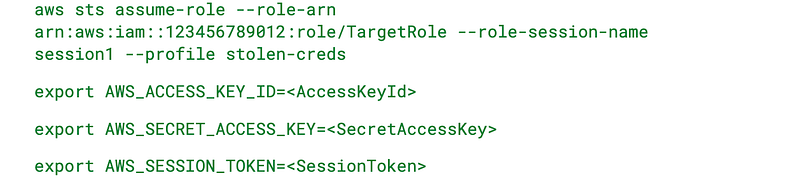
4. Privilege Escalation and Lateral Movement:
- Technique: Assuming roles with higher privileges to gain broader access within the AWS environment.
Example Command:
5. Data Exfiltration:
- Technique: Downloading large amounts of data from S3 buckets and storing them locally.
Example Commands:

6. Covering Tracks:
- Technique: Using a VPN and the Tor network to anonymize activities and avoid detection.
Example Tools:
- VPN Client: Configured to route traffic through a VPN service.
- Tor Browser: Used to access the internet anonymously.
Purpose: obscure the true IP address and make it difficult for investigators to trace the attack.
Conclusion
Recap of Key Points
The Capital One data breach underscores several critical vulnerabilities and exploitation techniques within cloud environments. The attack, executed through a combination of misconfigured web application firewalls, improper credential management, and insider knowledge, highlights key points:
- The significance of cloud misconfigurations and their potential exploitation through techniques such as SSRF.
- The critical nature of proper credential management, including the risks of credentials stored in instance metadata.
- The importance of monitoring and detecting unusual activities to prevent long-term undetected breaches.
- The role of insider threats and the need for comprehensive security measures to mitigate these risks.
Importance of Proactive Security Measures
Proactive security measures are essential for safeguarding cloud environments from sophisticated attacks. Organizations must:
- Regularly audit and configure cloud resources correctly.
- Implement robust credential management practices, including the use of short-lived credentials and multi-factor authentication.
- Continuously monitor cloud environments for unusual activities and potential threats.
- Educate and train staff on cloud security best practices to prevent insider threats.
- Creating an incident response plan to quickly detect and respond to breaches.
About the Author
Kai Aizen is a cybersecurity professional specializing in red teaming and cloud security. With a robust background in offensive security, Kai has authored numerous articles exploring the vulnerabilities in AI and cloud environments.
Kai’s research and practical insights into advanced techniques, such as jailbreaking AI models using context and social Engineering, contribute significantly to the cybersecurity community. Passionate about educating and empowering others, Kai actively shares knowledge through publications on platforms like Medium and Hakin9.
References
- Capital One Data Breach
- TechCrunch on Capital One Breach
- AWS Security Best Practices
- Justice.gov — Paige Thompson Case
- Masscan Tool
- Nmap Network Scanning
- AWS CLI Documentation
- Server-Side Request Forgery (SSRF) Overview
- AWS IAM Roles
- AWS STS Assume Role