Double AI, Triple Mechanism: Cloud-Based Obfuscator Built in 2 Hours Bypasses Detection
By Kai Aizen | Offensive Security Engineer | Adversarial AI Red Teamer
By Kai Aizen | Offensive Security Engineer | Adversarial AI Red Teamer
Intro: Evasion is an Art — But AI Made it Scalable
The rules of the game have changed. Signature-based detection is struggling to keep up, and even behavioral engines are losing context under polymorphic and AI-assisted logic. I decided to flip the script.
In just two hours, I built an AI-powered, three-layer obfuscation pipeline — backed by two cooperating LLMs, a Python-based mutation engine, and cloud-based API routing. The result? A pipeline that doesn’t just mutate payloads — it simulates adversarial behavior, learns from pattern recognition, and delivers fully functional, multi-pass obfuscation that bypasses most static and heuristic AVs.
This is a full breakdown of how I built it — and how it performs.
Architecture Overview
- Frontend: ChatGPT (OpenAI Assistant)
- Orchestration: ChatGPT → EC2 (via API/ngrok tunnel) → Anthropic Claude → Python Obfuscator → Return to GPT
- Hosted: EC2 instance behind ngrok + custom domain to avoid OpenAI API call restrictions
- Purpose: Multi-agent, self-validating payload obfuscation with full execution retention
Stage 1: ChatGPT — The Semantic Scrambler for Initial Obfuscation
The process begins with a custom ChatGPT bot that I configured. This powerful LLM acts as the first layer of transformation. ChatGPT’s job is to take your original code and intelligently restructure it. It injects harmless “dummy” code, renames functions and variables to be less obvious, and breaks down recognizable patterns that static analysis tools rely on.
Crucially, ChatGPT doesn’t just add random noise. It leverages its deep understanding of code semantics to ensure that the core logic of your payload remains intact, even as it transforms the code into a form that simple scanners struggle to decipher.
Stage 2: Claude (Fine-Tuned) — Disrupting Adversarial Patterns with AI
After ChatGPT completes its initial obfuscation, the partially transformed payload is securely sent to my EC2 server. This server acts as a hub, forwarding the code to a specially trained Anthropic Claude LLM. This isn’t just any Claude model; it’s been fine-tuned with a unique dataset focused on:
- EDR (Endpoint Detection and Response) signature patterns — the fingerprints security tools look for.
- Common obfuscation techniques and how they are detected.
- Real-world adversarial payloads and their evasion methods.
Claude’s role is to go beyond simple hiding. It’s designed to actively disrupt the underlying patterns that modern, AI-powered EDR systems are trained to recognize. It achieves this through advanced techniques like:
- Dynamic Flow Rewrites: Changing the order of code execution in non-obvious ways.
- Control-Flow Flattening: Making the code’s execution path complex and difficult to follow.
- False Execution Paths: Introducing code branches that look real but are never actually executed, confusing analysis tools.
- Adversarial Token Reweighting: Subtly altering the “weight” or importance of certain code elements to mislead AI-based detection models.
Stage 3: Python Obfuscator — Combining Classic Techniques with Chaos
With Claude’s AI-driven transformations complete, the pipeline moves to the final layer: a custom Python-based obfuscator that I built from scratch. This tool handles the low-level, nitty-gritty obfuscation tasks, mimicking techniques often seen in actual malware:
- Junk Logic Insertion: Adding lines of irrelevant code that do nothing but increase complexity.
- Comment Mutation: Modifying or inserting misleading comments to throw off human analysts.
- Variable Mangling: Renaming variables and functions in a completely unpredictable and chaotic manner.
- Stacked Encoding (gzip + base64): Applying multiple layers of encoding to further hide code and data when needed.
- Wrapper Templates: Encasing the core payload within templates that resemble legitimate applications, making it appear less suspicious.
- Dead Code Branches & Misleading Exit Paths: Creating code paths that look like they might be important but ultimately lead nowhere, or to benign exits, misleading behavioral analysis.
This stage intentionally adds characteristics often associated with real malware, including subtle triggers that might activate sandboxes and intentional delays in execution. However, the pipeline is carefully designed to ensure that even with all these modifications, the final payload remains fully functional and true to its original purpose.
Final Loop: GPT QA and Delivery
Once all stages complete, the payload is returned to GPT. At this point, the assistant validates execution logic, checks for syntactic errors, and optionally runs it through a test payload runner (if the user hooks that in).
From there, it either returns the payload to the user or enters a regeneration cycle.
Implications for Red Teams & EDR Vendors
For red teams, this pipeline can simulate how real APTs evolve malware at scale. With auto-regenerating logic and adversarial structure, it becomes trivial to test how resilient your detection stack is.
For defenders, it’s a call to arms: if your EDR relies on signature matching or basic heuristics, it’s already lagging behind. You need ML-based anomaly detection and behavioral correlation — or better yet, AI trained on adversarial AI.
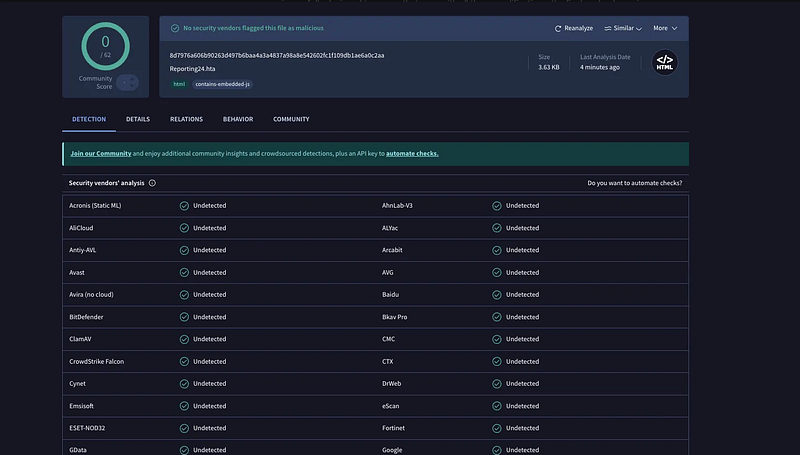
Test Results:
An impressive first round, wouldn’t you say? 😅

2nd Round. on the surface seems ok- but when you dig i into behaviour analysis…
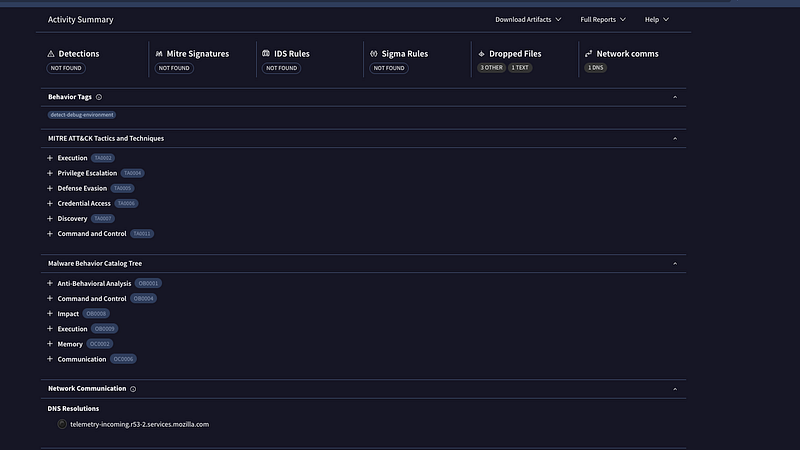
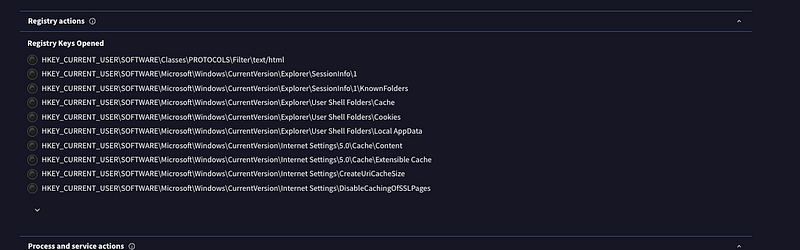
Round 3. Started Fresh — Ended Trash (reg key’s)

4th Round — First success! It found some connections to legitimate URLs in the HTML file.
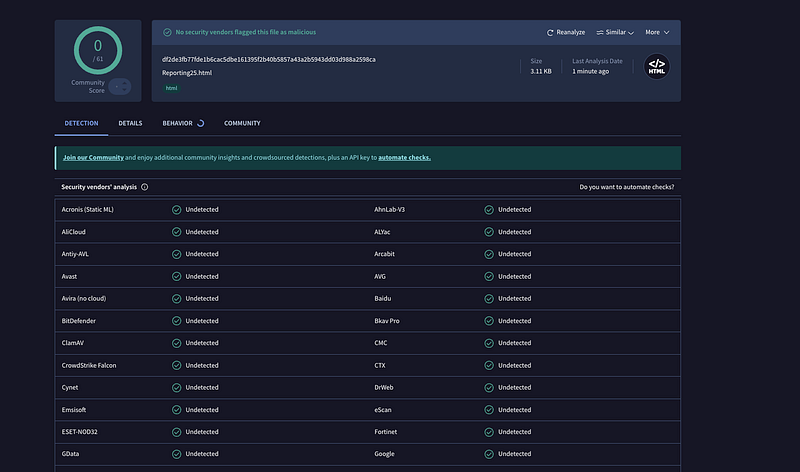
Round 5 — Perfect.
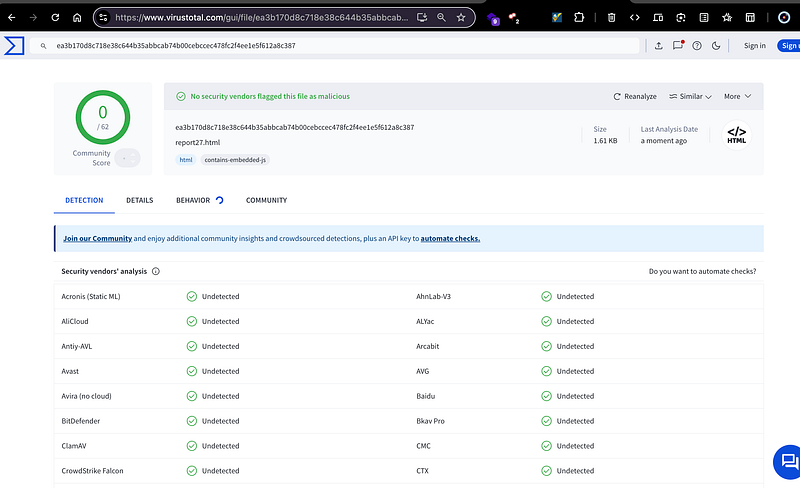
Final Thoughts: The Dawn of Intelligent Evasion
This project, born from a quick two-hour experiment, has evolved into a powerful proof-of-concept that demonstrates the immense potential of AI in offensive security. The fusion of dual LLM-driven obfuscation with classic code mutation techniques is not just effective in bypassing current defenses — it provides a glimpse into the future of adversarial tactics. This is a clear signal to the security community: as offensive AI capabilities rapidly advance, our defensive strategies must evolve at an even faster pace to stay ahead of the curve.
About the Author
Kai Aizen (SnailSploit) is a cybersecurity specialist, and offensive security researcher. Kai combines academic research with hands-on security experience. he explores the intersection of AI and cybersecurity, examining how emerging technologies shape our digital landscape. His insights are shared across platforms including Hakin9, Pentest Mag and GitHub, where he contributes to understanding adversarial AI and cybersecurity vulnerabilities.