By Kai Aizen — SnailSploit
In early 2019, a UK energy firm's CEO got a call from what he thought was his German boss. The tone, the cadence, even the faint accent — it was all there. The "boss" urgently requested a transfer of €220,000 to a Hungarian supplier. No alarms went off. The money was gone in minutes. This wasn't a prank — it was one of the first confirmed deepfake voice scams in the wild.
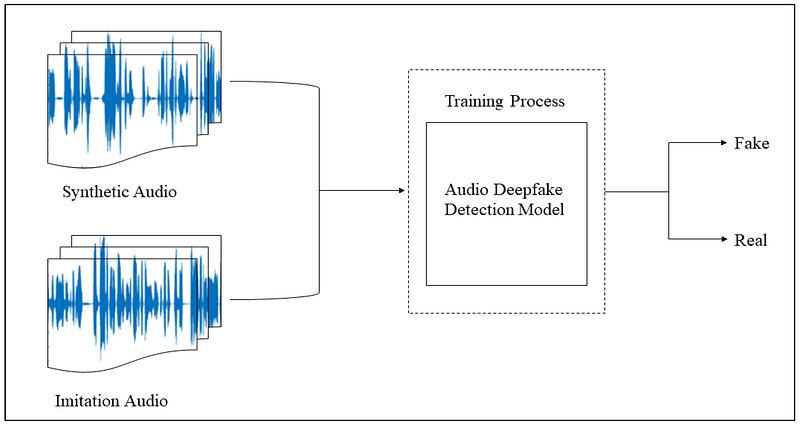
Fast forward to February 2024 — a Hong Kong-based finance staffer at engineering giant Arup joined what appeared to be a standard video call with the CFO and several colleagues. In reality, every single face and voice in that meeting was AI-generated. The attackers leveraged flawless voice cloning and video deepfake synthesis to orchestrate 15 fraudulent transfers totaling HK$200 million (~US$25 million).
These incidents highlight an urgent truth: voice is now a credential — and with the rise of generative AI, it's easier than ever to forge.
Why Deepfake Voices Work So Well
In my book Adversarial Minds, I break down the social-engineering underpinnings of these attacks. Deepfake voice scams tap directly into three psychological vulnerabilities:
- Authority Bias — People are wired to trust voices they associate with senior figures.
- Urgency Effect — The "this must happen now" framing short-circuits rational risk assessment.
- Familiarity Comfort — When a voice matches someone we know, skepticism drops dramatically.
Combine these with AI that can mimic tone, accent, and conversational rhythm, and you have scams that bypass both technical and human filters.
The Modern Detection Toolkit
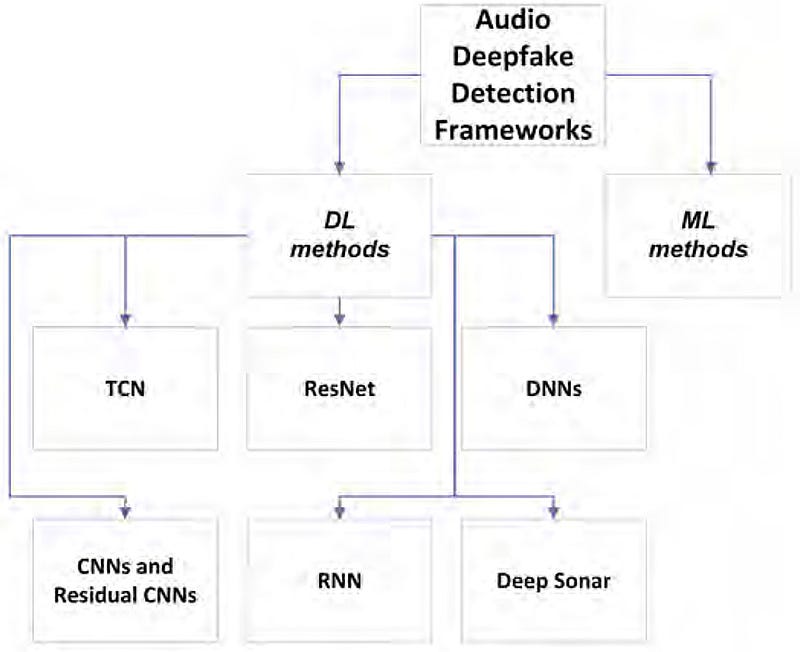
Even though tools are evolving fast, defenders can start with proven detection layers:
| Tool / Method | What It Does | Use Case |
|---|---|---|
| ASVspoof | Academic benchmark for anti-spoofing models | Validates that detection algorithms hold up under adversarial testing. |
| pyannote.audio | Open-source diarization & speaker embeddings | Confirms speaker identity in calls and compares to known profiles. |
| Pindrop | Commercial platform for voice fraud detection | Real-time analysis for call centers and high-risk transactions. |
| Reality Defender | API for multi-language deepfake detection | Ideal for multinational firms handling multilingual voices. |
| Liveness Checks | Verifies speech is live, not pre-recorded or synthesized | Effective in meeting platforms before sensitive discussions. |
Real-World Case Study: The Arup Scam
Attack Vector:
- Initial hook via phishing email to set up a "private" financial call.
- Use of deepfake video and voice in a live multi-person setting (synchronized lip movements + cloned vocal timbre).
- Plausible narrative involving "confidential vendor transactions" to bypass suspicion.
Why It Worked:
- Identity + Context Match — Everything looked and sounded right.
- Plausibility — Transactions fit internal vendor payment norms.
- Single-Channel Verification — No out-of-band confirmation steps.
Defensive Takeaways:
- Integrate pre-call liveness scoring into conferencing tools.
- Implement dual-channel challenge codes for sensitive requests.
- Enforce payment policy friction: large transfers require a second human verifier outside the initiating channel.
Technical & Behavioral Detection Layers
Acoustic Signals: detect subtle waveform irregularities, formant anomalies, and unnatural pitch control.
Prosodic Signals: spot mechanical pauses, overly uniform speech tempo, or filler placement anomalies.
Behavioral Signals: monitor request content for deviations from historical patterns (e.g., new payee, sudden urgency, time-of-day mismatch).
Embedding This in AATMF Strategy
This fits squarely into the Adversarial AI Threat Modeling Framework (AATMF) under:
- Legitimacy Masking — Mimicking real entities to bypass suspicion.
- Adaptive Escalation — Gradually increasing the stakes until the victim complies.
In red-team labs, we've simulated deepfake calls internally to measure transaction approval rates under realistic audio impersonations. The results are sobering: even security-trained staff can fail in under 60 seconds when trust cues are fully aligned.
Moving Forward: Multi-Layer Defense Playbook
- Carrier Layer: STIR/SHAKEN adoption to verify call origin authenticity.
- Meeting Layer: Pre-join biometric or liveness tests for high-sensitivity calls.
- Detection Layer: Acoustic + prosodic classifiers in shadow mode before hard-blocking.
- Identity Layer: Continuous speaker embedding checks against internal profiles.
- Policy Layer: Enforce multi-approver rules for all high-value transactions.
- Awareness Layer: Run red/blue simulations with synthetic voice impersonations so teams experience the attack firsthand.
Closing Thoughts
Deepfake audio is no longer a theoretical risk — it's a practical attack vector now used in multi-million-dollar heists. Detection must be both technical (waveform analysis, liveness scoring) and human (policy friction, awareness). If voice is a password, treat it with the same suspicion as one — and remember that the attacker only needs one lapse to succeed.
About the Author
Kai Aizen (SnailSploit) is a GenAI Security Researcher and NVD Contributor specializing in adversarial AI, LLM jailbreaking, and prompt injection. He is the creator of AATMF and author of Adversarial Minds. His work has been published in Hakin9, PenTest Magazine, and eForensics.
Follow his research at SnailSploit.com · GitHub · LinkedIn